Tag: Wk 5

Drawing Game || Health Class

Hello everyone,

Welcome to another Health blog. Today in Health, we played a drawing game. We had to work in pairs and sit back-to-back. One person had to pick a picture and then explain it to their partner, who had to draw it without seeing the original. It was very fun and interesting to see how the drawings turned out.

In this blog, I will be answering some questions related to today’s activity. For our blog task, we had to choose a level: Ace, Pro, Legend, or Titan. I picked Titan because I knew what I wanted to write.


Explain what Te Whare Tapa Whā is –

Te Whare Tapa Whā is a Māori model of health that explains how our wellbeing is made up of four important parts, like the four walls of a house.

  • Taha tinana – our physical health (our body)
  • Taha hinengaro – our mental and emotional health (our thoughts and feelings)
  • Taha whānau – our social health (our relationships with friends and whānau)
  • Taha wairua – our spiritual health (our beliefs, values, and sense of purpose)

If one wall is weak, the whole house becomes unstable. This shows that we need to look after every part of our hauora, not just our body or our mind, so we can stay balanced and healthy.


Describe your activity in detail –

Our activity was a partner drawing game. We were put into pairs and had to sit back-to-back so we couldn’t see each other’s papers. One person in the pair was the describer, and the other person was the drawer.

The describer was given a picture and had to explain what it looked like using only words. They weren’t allowed to show the picture or use hand gestures because we were facing away from each other. The drawer had to listen carefully to the instructions and try to draw the picture as accurately as possible.

We had turns, so my buddy got to do 2, and I got to do 1, but it was interesting how the pictures turned out. I feel my buddy did a better job than me in describing.


Explain how your hauora was impacted by participating in today’s activity –

  • Taha hinengaro (mental and emotional health): My mental and emotional health was positively affected because the activity was fun and made me feel relaxed. I had to concentrate and think carefully about how to describe or understand the instructions. It was also a bit challenging, but in a good way. I felt proud and amused when I saw the final drawing, even if it wasn’t perfect.

  • Taha whānau (social health): This activity helped my social health because I had to work closely with my partner. We needed to trust each other and communicate clearly. We also laughed together when we compared the pictures, which helped build our relationship and made the classroom feel more connected and supportive.


Explain what is important to know or understand when participating in a game with others –

When participating in a game with others, it is important to understand:

  1. Clear communication – You need to listen carefully and speak clearly so everyone knows what to do. In our drawing game, good communication was the key to getting the picture right. If the instructions are confusing, people can feel frustrated or left out.

  2. Teamwork – Many games, like the one we played, rely on working together. Teamwork means helping each other, listening to each other, and trying your best as a pair or group. Good teamwork makes the activity more successful and fun.

  3. Having a positive attitude – It’s important to remember that games are for learning and having fun, not just for winning or being perfect. A positive attitude helps you enjoy the experience, even if the drawing doesn’t turn out exactly right. This is important because it supports your hauora and the hauora of others.


Pictures of the activity –


Thank you for reading my blog today,

Shreeya

Relief Activity – Music Class

Hello everyone, welcome back to my blog.

Today in music, we had a relief teacher, so we were given some relief work. First, we played a music game where you have to guess different treble clef notes. If you want to try this game, click here. Next, we completed relief tasks. There was a set of slides, and I had to pick a task to finish before the period ended. First, I explored Music Lab, a fun and creative platform to make music. Then, I completed a task called Reggae. In this blog post, I’ll be sharing my reggae task. I hope you enjoy it, and I would appreciate your feedback.

Task

Music Activity


That’s all for my blog

Goodbye👋

Shreeya❀


Safety in the Laboratory || Science Class

Hello everyone, welcome back to my blog.

Today, my science class was held in the biology room. Before we began, it was essential for us to understand the materials required and the safety precautions we needed to follow. This helps ensure that everyone stays safe and has a successful learning experience. In this blog post, I will be writing about the importance of safety in the laboratory.


‘Safety Tips’

  1. Place your bag under your desk.
  2. Don’t enter a science laboratory without a teacher.
  3. Always wear safety glasses when using fire or chemical mixing.
  4. Walk into a science laboratory. No running.
  5. No eating or drinking in a science laboratory.
  6. Any breakages need to be reported to the teacher.
  7. All glass goes in the ‘Glass Bucket’.


Afghanistan to Aotearoa and Skiing in Afghanistan || Social Studies / Literacy

Hello everyone, and welcome back to my blog. Over the past two weeks, I have been working on a task about refugees. But before I tell you what I’ve learnt, let’s start with a basic question: What exactly is a refugee?

A refugee is a person who has been forced to leave their country because of war, violence, persecution, or a fear of harm. Refugees cannot safely return home and seek protection in another country. They leave everything behind to find safety, often facing many challenges along the way.

For my task, I really wanted to challenge myself, so I chose the ‘Titan’ level task. My first step was to read two  passages: ‘Afghanistan to Aotearoa’ and ‘Skiing in Afghanistan.’ After reading these, I completed a follow-up activity that helped deepen my understanding. One of the tasks was that I had to summarise passages by focusing on the who, what, when, why, where, and how of each article, and then craft a brief sentence highlighting the key information I gathered.

Next, my task was to create an informative piece of peel paragraph writing that included ‘From Afghanistan to Aotearoa’ and ‘Skiing in Afghanistan.’

These tasks and articles have taught me a lot about the challenges refugees face and the journeys they undertake.


Here is a question that I have to answer as part of one of my tasks.

What challenges do people face when they become refugees?

When people become refugees, they often face a range of daunting challenges that can deeply affect their lives and well-being. They may be forced to leave behind their homes, possessions, and even loved ones, thrust into unfamiliar environments where language barriers and cultural differences can make integration difficult. Access to basic necessities such as food, clean water, shelter, and healthcare is often limited, and refugees may experience trauma from both the events that caused them to flee and the uncertainty of their new situation. Discrimination, lack of legal protection, and difficulties finding employment or education opportunities further complicate their ability to rebuild their lives.

Some challenges they can also face are:

  • Loss of home and personal belongings
  • Difficulty accessing basic needs (food, water, shelter)
  • Language and cultural barriers
  • Emotional and psychological trauma
  • Limited job and education opportunities
  • Social discrimination and isolation
  • Uncertain legal status or lack of protection

Thanks, that’s all for my blog post today.

Shreeya

The importance of the water cycle || Science Class

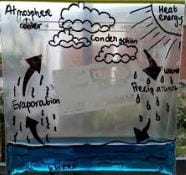
Hello everyone, welcome to another blog post about science. Today, we learned why the water cycle is important and participated in an interesting activity. In this blog, I will share six reasons why the water cycle is vital, followed by a description of the activity we did related to evaporation, condensation, precipitation, and runoff. The picture below shows what we created. Our project is currently displayed on our classroom window, which enhances our understanding of the water cycle we made.

Enjoy this blog post!


Why is the water cycle important?

The water cycle is incredibly important for many reasons. Here are 6 reasons:

1)Provides fresh water

It ensures that we have a constant supply of fresh water to drink, cook with, and use in our daily lives. Without the water cycle, we would run out of clean water very quickly!


2) Helps Plants Grow:

Plants need water to grow. Through precipitation, the water cycle delivers the necessary water to plants, helping them to flourish. This is essential for producing the food we eat, the oxygen we breathe, and maintaining the natural beauty of our environment.


3) Regulates Weather and Climate: 

The water cycle plays a crucial role in regulating the Earth’s weather and climate. The process of evaporation and condensation helps to distribute heat around the globe, influencing weather patterns and keeping our planet’s temperature balanced.


4) Supports all living things:


Every living thing, from tiny insects to giant whales, depends on water to survive. The water cycle ensures that water is available to all forms of life, providing habitats for animals and helping ecosystems thrive.


5) Cleans and Filters Water:

As water moves through the cycle, it goes through natural filtration processes. When water evaporates, it leaves impurities behind, and when it seeps through the ground, it gets filtered by soil and rocks. This natural cleaning process is vital for maintaining the purity of our water sources.


6) Drives the Earth’s system

The water cycle is interconnected with other natural cycles, like the carbon cycle and nitrogen cycle. It helps to drive these systems, ensuring that nutrients are cycled through the environment, supporting life and maintaining the health of our planet.


Activity –

Materials:

Ziploc bag, water, blue food colouring, a permanent marker, and tape.

Steps:

  1. Draw a sun, clouds, and waves on the outside of the bag with the marker. Add process names.
  2. Fill the bag with a small amount of water and add a few drops of blue food colouring.
  3. Seal the bag tightly and tape it to a sunny window.
  4. Observe over a few days as the water evaporates, condenses on the sides of the bag, and then “rains” back down. We will look at these more next week.

This is what it’s supposed to look like

Thanks for reading my blog

Shreeya

The Water cycle || Science Class

Hello everyone, welcome back to my blog. Today in science, we learnt about ‘The water cycle’.


Achievement Objective:

Planet Earth and Beyond: Earth Systems – Investigate the water cycle and its effect on climate, landforms, and life.

Learning Objective: 

Students will describe the stages of the water cycle and create a diagram that accurately represents these stages.


Water

Liquid –

  • Rain
  • Hail
  • Snow
  • Sleet

Solid

  • Ice

Gas

  • Steam
  • Water Vapour


Water cycle

If all the water on Earth is continually cycled in this way, with no ‘new’ water being created, where did all the water on Earth come from originally?

What is the water cycle?

The water cycle describes how water evaporates from Earth’s surface and the oceans because of the heat from the Sun, rises into the atmosphere, where it cools and condenses into rain or snow in clouds, and falls back to the ground as rain, hail and snow.


Understanding the water cycle

Rain is a natural phenomenon that is linked to the water cycle, a continuous process that regulates the distribution of water on Earth. 

The water cycle, the processes of evaporation, condensation, and precipitation that occur to maintain the Earth’s water balance. Rain is a direct result of the water cycle, serving as a vital component of this natural process.

The water cycle is like a big, magical loop that keeps water moving around our Earth. Let’s follow a drop of water on its amazing journey.


Evaporation

Imagine you’re outside on a sunny day. The sun shines down and warms everything up. When the sun’s heat warms up rivers, lakes, and oceans, the water starts to change. It turns into a gas called water vapour. This process is called evaporation. It’s like when you see steam rising from a hot pot of water.


Condensation

As the water vapour rises up into the sky, it gets cooler. When it gets cool enough, it changes back into tiny drops of water. This is called condensation. These tiny drops come together to form clouds. So, clouds are really just made up of lots of little water drops!


Precipitation

Now, the clouds are floating around, full of water drops. When the clouds get too heavy with all that water, the drops fall back down to Earth. This falling water is what we call precipitation. Precipitation can be rain, snow, sleet, or hail, depending on the temperature. If it’s warm, we get rain. If it’s cold, we might get snow.


Collection

Once the water falls to the ground, it needs to go somewhere. It collects in rivers, lakes, and oceans. Some of it soaks into the ground and becomes part of the underground water supply. Plants and trees also drink up some of this water to grow.


Ace, Pro, Legend – Questions

legend

1. Explain in detail the water cycle.
The water cycle is the continuous movement of water on Earth. It starts with evaporation, where sunlight heats up water in rivers, lakes, or oceans, turning it into water vapour. Then, the vapour rises and cools, leading to condensation, where it forms tiny water droplets that come together to create clouds. When these clouds become too heavy, the water falls back to Earth as precipitation, which can be rain, snow, sleet, or hail. Finally, the water collects in rivers, lakes, and oceans, ready to start the cycle all over again.

2. Describe two ways water enters our atmosphere.
Water enters our atmosphere mainly through evaporation, where water from oceans, lakes, and rivers turns into vapour due to the heat from the sun. Another way is through transpiration, where plants release water vapour into the air from their leaves.

3. Why do the sea levels not drop when water is evaporated from it?
Sea levels don’t drop because the water that evaporates eventually falls back to Earth as precipitation. Plus, water cycles between different forms (like gas and liquid) and doesn’t disappear, it just changes form.

4. Where does water come from?
Most of the water on Earth comes from the early days of our planet when it formed. Some of it came from comets and asteroids hitting Earth, while some was released from volcanoes. Today, the water on Earth is recycled through the water cycle, meaning we are using the same water that has always been here.


Thanks for reading,

Shreeya

Textiles – A choice activity || Textiles

Hello, bloggers, welcome back to my blog.

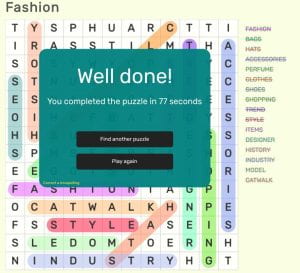
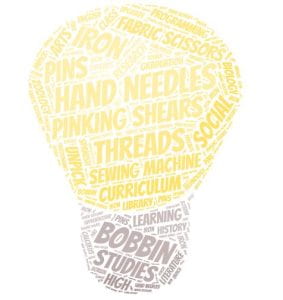
Since our textiles teacher was absent, we had to do some extra activities. I engaged in several tasks, including word finds, word art, and a few other activities. I hope you enjoy what I’ve shared.

Word Find


Word Art


Research Task

Research how sewing machines have developed over time.

Sewing machines have evolved significantly over the years. 

In the late 1700s, Thomas Saint created the first sewing machine design, but it wasn’t built. In the 1800s, Elias Howe patented a machine featuring a lock stitch. Isaac Singer made it more popular by adding a foot pedal for easier operation.

By the late 1800s, mass production made sewing machines widely available. In the mid-20th century, machines gained features like zigzag stitches and automatic buttonholes, making sewing a popular craft.

Today, many sewing machines are computerised, allowing for advanced designs and embroidery, with a focus on sustainability and energy efficiency.


Thanks,

That’s all the tasks I did in textiles I did.

Shreeya