Hello everyone, and welcome back to my blog. Today in science class, we delved into the fascinating world of adaptations. We explored what adaptations are and discovered some incredible examples in the animal kingdom.
In this blog post, I will share what I learned about how different animals have evolved unique traits to survive in their environments. From the camouflage of chameleons to the thick fur of polar bears, adaptations are truly remarkable. Join me as we uncover the wonders of nature and how these adaptations help animals thrive in their habitats. I hope you enjoy this exploration into the world of adaptations.
Adaptions
An organism’s survival depends on the abiotic and biotic factors in its habitat. Survival also depends on the organism’s characteristics. Characteristics that help the survival of an organism in its habitat are adaptations.
There are three types of adaptation:
- Structural – the physical characteristics of an organism.
- Functional – the chemical reactions and bodily functions of an organism.
- Behavioural – characteristics that relate to specific behaviours of an organism.
More on Adaptations
Structural adaptations are the physical characteristics of the organism; they might be size, shape, colour or the way the various parts of the organism are put together.
Example: Cactus Leaves Adaptation: Spines instead of leaves to reduce water loss and protection from grazing animals.
Structural Adaptations
Examples are:
- Leaf size (banana leaves)
- Seed shape (oak seeds)
- Flower shape and structure (orchids)
- Protective spikes (hedgehog)
- Size or number of teeth (sharks vs sheep)
- Type of skeleton (crayfish vs human)
Mini Task
- Choose an organism and put a picture in your blog.
- Does it have any structural adaptations?
- What are they?
- How does this help with survival?

Leaf Size – Banana Leaves
Banana leaves are large, broad leaves that can grow up to 3 metres long and 60 centimetres wide.
Does it have any structural adaptations?
Yes, banana leaves have several structural adaptations.
What are they?
- Large Surface Area: The extensive surface area enables maximum sunlight absorption, facilitating efficient photosynthesis.
- Thin and Flexible Structure: This helps the leaves to withstand strong winds and heavy rainfall without tearing.
- Layered Structure: The leaves are composed of layers that enable water to run off, preventing water accumulation that could lead to fungal growth.
How does this help with survival?
These adaptations allow banana plants to thrive in tropical environments by optimising light capture for photosynthesis, reducing damage from environmental stresses, and minimising the risk of disease, ultimately ensuring their growth and reproduction.
Adaptations
Functional adaptations refer to the chemical reactions and bodily functions of an organism.
Example: Production of smelly chemicals – an adaptation to attract pollinators
Some plants, such as the corpse flower found in the rainforests of Sumatra, Indonesia, give out a smell like that of rotting flesh. The smell attracts the plant’s pollinators – dung beetles, carrion beetles and flesh flies – that typically would feed on dead flesh.
Functional Adaptations
Examples are:
- Producing Venom (scorpions)
- Producing smelly chemicals (skunk)
- Being warm-blooded (birds and mammals)
- Being cold-blooded (lizards and fish)
- Able to digest plants (sheep and cows)
- Water storage (cacti and Camels)
Mini Task
- Does your organism have any functional adaptations?
- What are they?
- How does this help with survival?
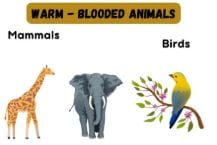
Warm-blooded animal – Bird
Does your organism have any functional adaptations?
Yes, birds possess several functional adaptations that aid in their survival.
What are they?
- Hollow Bones: Many birds have hollow bones, which reduce their overall weight, allowing for easier flight.
- Feathers: Birds have feathers that provide insulation, aiding in temperature regulation.
- Beaks: The shape and size of a bird’s beak are adapted to their diet, enabling them to exploit specific food sources effectively.
- Respiratory System: Birds have a highly efficient respiratory system that includes air sacs for continuous airflow, providing a constant supply of oxygen.
How does this help with survival?
These adaptations enhance a bird’s ability to find food, evade predators, and thrive in diverse environments.
- Efficient Flight: Hollow bones and feathers improve aerodynamics, allowing birds to escape predators and travel long distances.
- Temperature Regulation: Feathers help maintain body temperature, enabling activity in harsh weather.
- Specialised Feeding: Diverse beak shapes allow access to various food sources, reducing competition and enhancing survival.
- Oxygen Supply: An efficient respiratory system supports high-energy activities, improving responsiveness to threats and mate finding.
Overall, these adaptations are critical for a bird’s survival, enabling them to exploit resources and adapt to their environments.
Adaptations
Behavioural adaptations are characteristics that relate to specific behaviours of an organism.
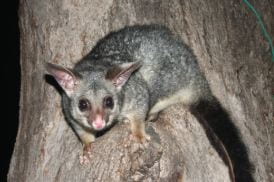
Example: Being nocturnal (active at night) – an adaptation that allows predator avoidance
Animals such as the New Zealand brushtail possum, which are nocturnal, can avoid many potential predators such as humans and cats.
Behavioural Adaptations
Examples are:
- Mating behaviours (birds and insects)
- Aggression (lions and tigers)
- Migratory behaviour (godwits)
- Tools (apes)
- Playing dead (possums)
Mini Task
- Does your organism have any behavioural adaptations?
- What are they?
- How does this help with survival?

Tools – Apes
Does your organism have any behavioural adaptations?
Yes, apes possess several behavioural adaptations that aid in their survival.
What are they?
- Social Structure and Communication: Apes live in groups known as troops or bands, which allows for cooperative behaviours like grooming and food sharing. They communicate through vocalisations, gestures, and facial expressions, strengthening social bonds and enhancing group cohesion.
- Tool Use: Certain ape species, especially chimpanzees, have been observed using tools to obtain food, such as sticks to extract termites from mounds. This ability showcases their problem-solving skills and adaptability to their environment.
- Play Behaviour: Young apes engage in play, which is essential for developing social skills and learning survival strategies. Through play, they learn to interact with others and practice behaviours necessary for adulthood, such as foraging and conflict resolution.
How does this help with survival?
- Enhanced Cooperation: Social behaviours promote group living, providing protection from predators and increasing foraging success.
- Resource Acquisition: Tool use enables apes to access food sources that would otherwise be unavailable, improving their diet and nutritional intake.
- Skill Development: Play behaviour contributes to the development of crucial life skills, enhancing their chances of survival in the wild.
Task –
- Choose an organism
- List one of each of the following
- Structural adaptation
- Behavioural adaptation
- Functional adaptation
Chameleon
Structural Adaptation: Chameleons have specialised skin cells called chromatophores that allow them to change colour for camouflage and communication.
Behavioural Adaptation: They exhibit a behaviour of slow and deliberate movement to avoid detection by predators, as well as changing their colour in response to social signals or environmental conditions.
Functional Adaptation: Chameleons possess a long, sticky tongue that can extend rapidly to capture prey from a distance, aiding in their survival by allowing them to catch insects efficiently.
Thanks, that’s all for my blog, hope you enjoyed
Bye, Shreeya